

The EU has banned glitter in cosmetics, plastic cotton buds, a brand of weedkiller, several thousand chemicals you have never heard of, and for a while it looked seriously at the shape of bananas. It is not a regulator famous for its restraint.
So here is a question worth sitting with. If paraffin wax really did fill your living room with carcinogens, where is the ban?
It does not exist. Paraffin wax candles are legal everywhere in the EU, sold in every supermarket, and are not restricted under REACH.
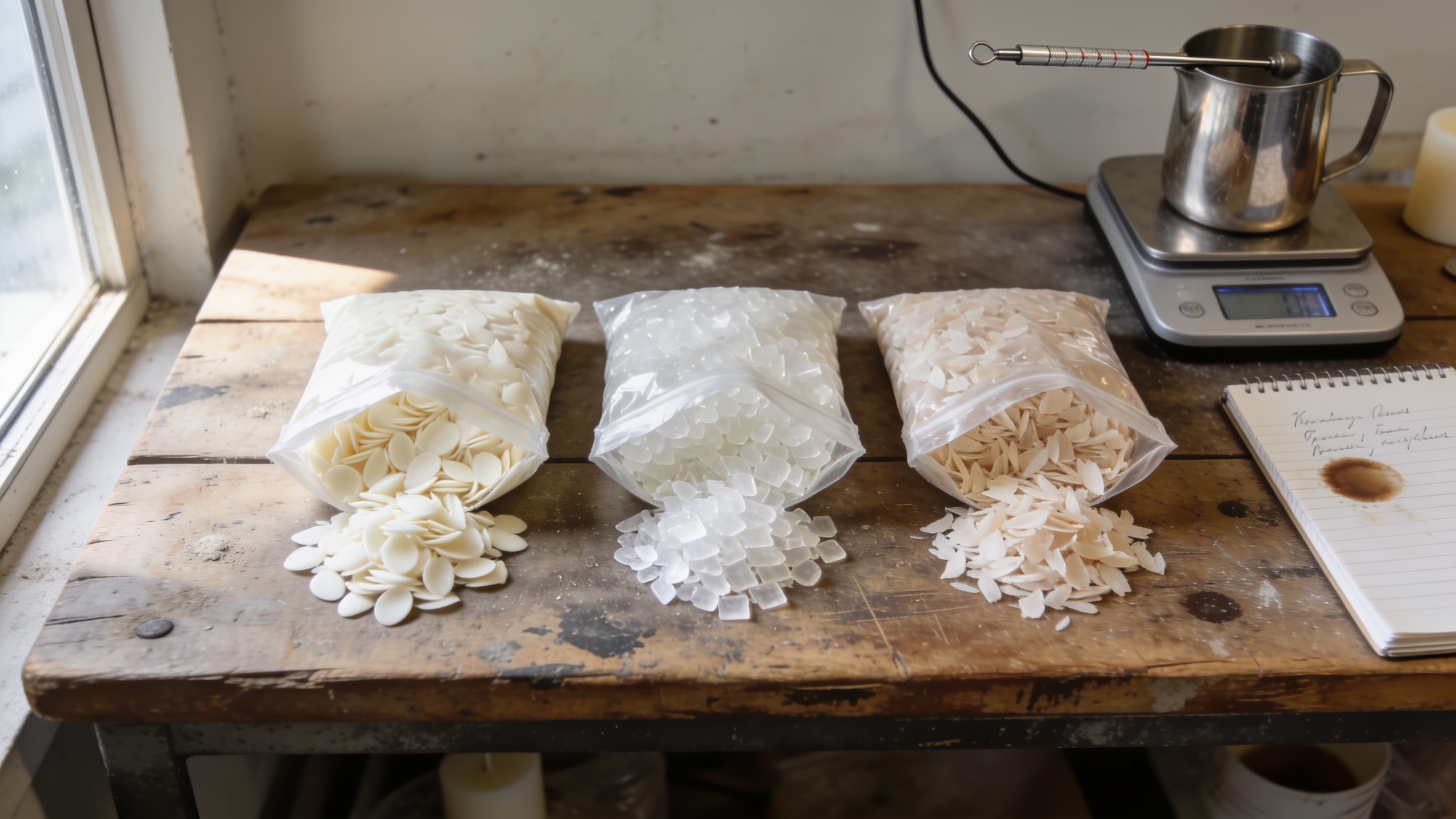
The ban people are half remembering
Here is where the confusion starts, and honestly it is a fair mistake to make.
The EU has come down hard on something called paraffin. Short-chain chlorinated paraffins (SCCPs) are Substances of Very High Concern and effectively banned. Medium-chain ones (MCCPs) joined the candidate list in 2021.
Different material. Chlorinated paraffins are industrial chemicals, chlorine bolted onto a paraffin backbone, used in metalworking fluids and flame retardants. They are persistent, they bioaccumulate, they are genuinely nasty, and nobody has ever put one in a candle.
Candle paraffin is not chlorinated. Same word, different substance. It is a bit like banning lead paint and concluding that pencils are dangerous.
Where the scary study came from
Almost every "paraffin is toxic" article traces back to one piece of research from South Carolina State University in 2009. It found paraffin candles released toluene and other compounds, got picked up by NPR, and has been quoted ever since.
Three things about it rarely make it into the retelling.
It was presented at a conference and never published in a peer reviewed journal. It compared paraffin against exactly one other wax, soy, and nothing else. And it was funded by a USDA soy research grant.
None of that makes it automatically wrong. It does mean that the single most cited source for "paraffin is dangerous" is unreviewed research, with a narrow comparison, paid for by the soy industry. That is worth knowing before you repeat it to a customer.
What the actual research found
Meanwhile, quietly, people kept studying this properly.
In 2007 Oekometric ran an international study across paraffin, soy, stearin, palm and beeswax. Well made candles of every type burned the same way, with no discernible risk to health. Not "paraffin was acceptable". The same.
In 2018 the Danish EPA looked at what candle particles actually are and found they consist almost entirely of water soluble salts, with very low soot. Chemically they have little in common with traffic particulates, which is the comparison the scary articles love to reach for.
In 2021 Salthammer and colleagues published the big one in Environment International: 24 candle configurations, four wax types, five fragrances. Most indoor concentrations landed well below guidance values. There were exceptions worth taking seriously, including nitrogen dioxide and acrolein, but they were not a paraffin problem. They were a combustion problem, and combustion is what all candles do.
Then in 2022 a Danish cohort study followed 6,757 people and found no statistically significant link between candle use and cardiovascular or respiratory events. It did find that frequent candle users exercise more and are better off, which is a lovely detail and tells you something about who buys candles rather than what candles do.
Four studies. Different countries, different funders, different decades. All landing in roughly the same place.
Now the part soy people will not enjoy
We sell soy wax. Two of them. We are not about to pretend it is bad.
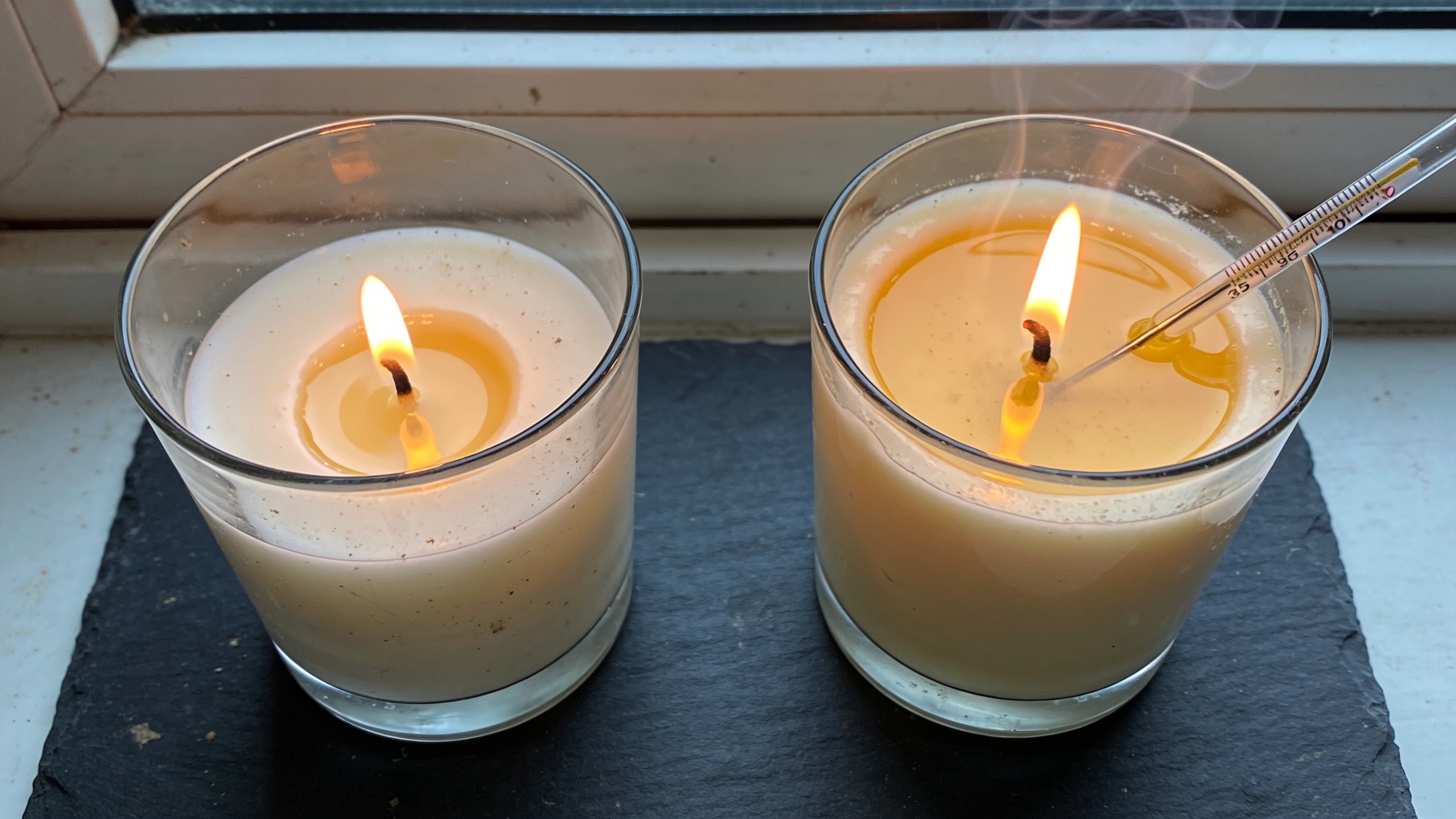
But the quiet truth every maker works out eventually is this: 100% soy throws weaker than paraffin. Not sometimes. Generally, and for reasons that are pure physics rather than opinion.
A soy melt pool sits around 120 to 130°F. Paraffin runs hotter, roughly 140 to 160°F. Fragrance has to get airborne to be smelled, and a cooler pool puts less energy into doing that. Soy also tops out lower on fragrance load, around 6 to 10%, where paraffin will take up to 12%.
Soy is also fussier. It wants the right wick, a proper two week cure, and a load that suits it. Plenty of makers get beautiful throw from soy. They get it by being good, not because soy made it easy.
None of which makes soy a bad wax. Lovely finish, bonds well with fragrance, renewable. It is just not the free lunch it is usually sold as.
Which is the entire point of blending
A parasoy blend is not a compromise or a dirty secret. It is somebody solving the problem on purpose.
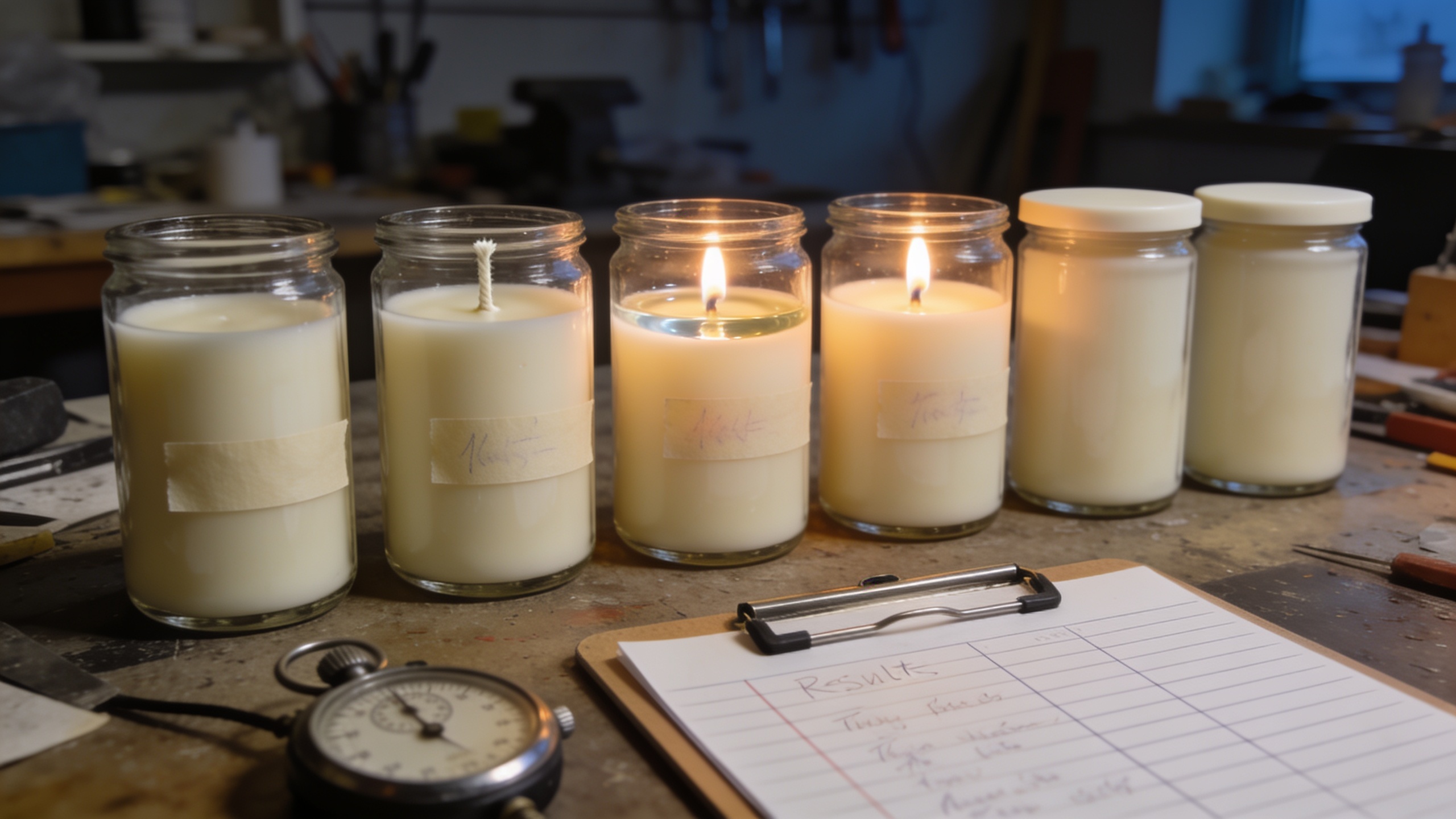
Paraffin carries scent. Soy gives you the creamy finish, the smooth tops, the adhesion, the renewable content. Blend them and you get a candle that throws properly and looks like you meant it.
That is why blends are everywhere in production candle making, including in brands that would rather you did not look too closely at the label.
So burn what you like
Soy because you like the finish. Paraffin because you want throw. A blend because you want both. Beeswax because it is beautiful and you are not counting the cost.
All of them are fine. All of them are legal. All of them have been studied more than you would expect.
Just do not pick one because a pamphlet told you the other one was poison. The regulator that bans everything had a good long look at paraffin and decided it was a candle.
Sources
- Oekometric international candle emissions study, 2007
- Danish EPA (Miljøstyrelsen), candle particle emissions, 2018
- Salthammer et al., Environment International, 2021
- Loft et al., Indoor Air, 2022
- ECHA substance information, SCCPs and MCCPs
- Massoudi & Hamidi, South Carolina State University, 2009 (conference presentation, unpublished)